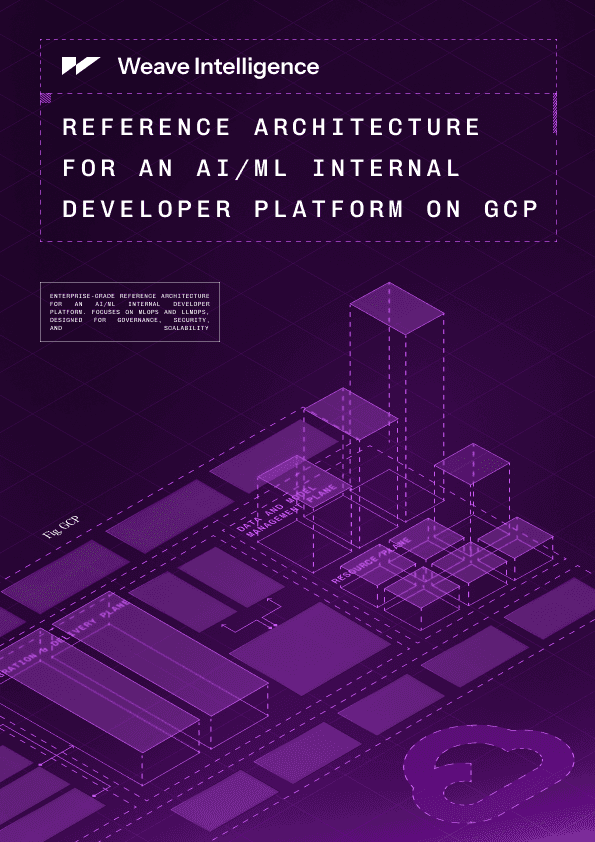
Reference architecture for an AI/ML Internal Developer Platform on GCP
Reference architecture for an AI/ML Internal Developer Platform on GCP



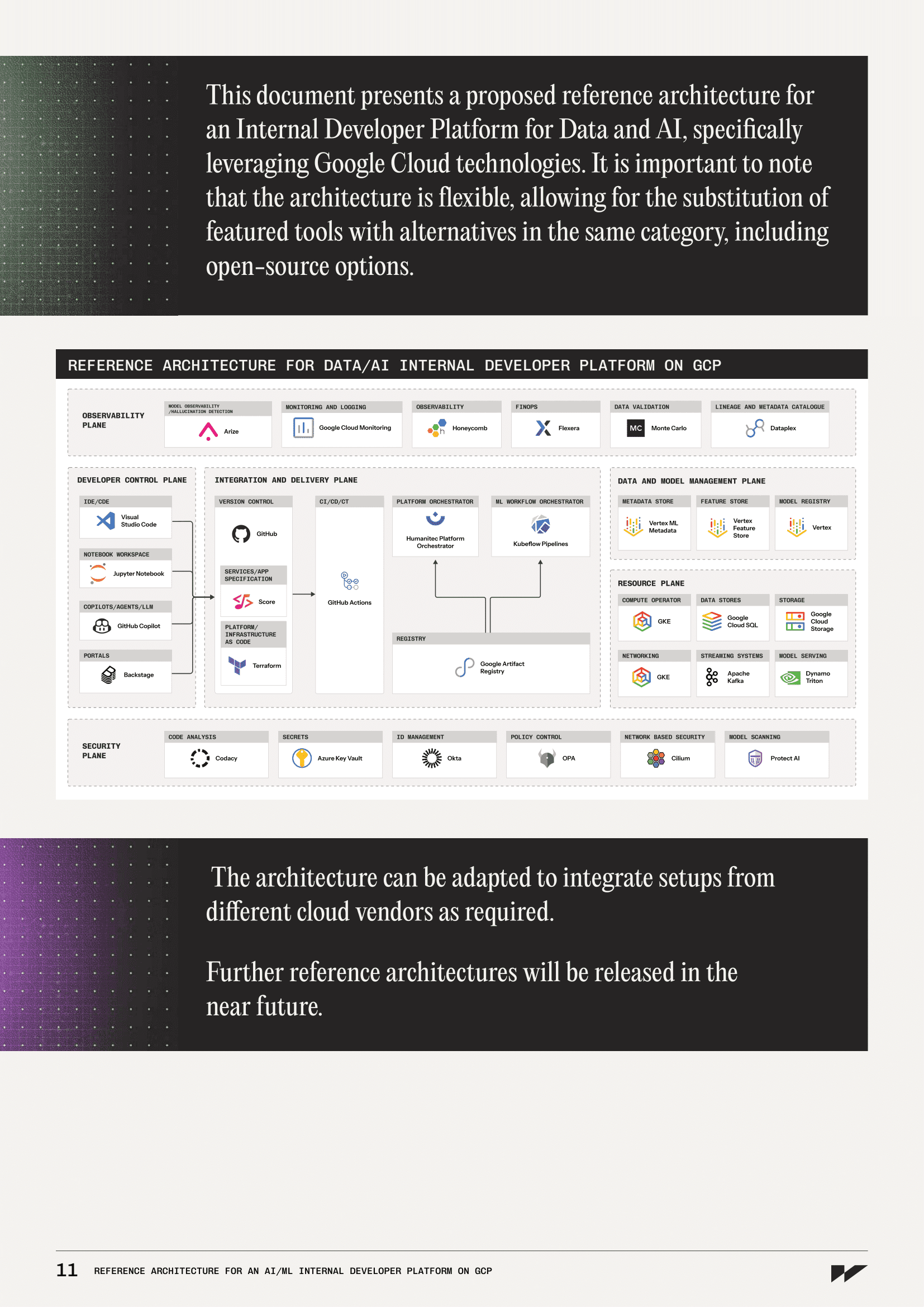
As enterprises race to operationalize AI beyond scattered pilots, this GCP reference architecture distills hard-won lessons from real platform teams into a practical blueprint for an AI/ML Internal Developer Platform. It rethinks the stack as six modular “planes” to keep fast-moving ML tooling governable, reproducible, and scalable, secure-by-default, automation-first, and built to deliver compliant models to production with the same consistency modern IDPs bring to software.
As enterprises race to operationalize AI beyond scattered pilots, this GCP reference architecture distills hard-won lessons from real platform teams into a practical blueprint for an AI/ML Internal Developer Platform. It rethinks the stack as six modular “planes” to keep fast-moving ML tooling governable, reproducible, and scalable, secure-by-default, automation-first, and built to deliver compliant models to production with the same consistency modern IDPs bring to software.
About the report
This whitepaper explains how enterprises can move from isolated AI/ML pilots to secure, repeatable, cost-controlled production by building a purpose-built Internal Developer Platform (IDP) for Data/AI/ML on Google Cloud. You’ll learn:
Why AI/ML efforts stall at the pilot stage: fragmented tooling, data complexity, reproducibility gaps, monitoring blind spots, security/compliance risk, and runaway GPU/compute costs are the recurring blockers.
What makes an AI/ML IDP different from a traditional software IDP: AI/ML adds notebooks, multi-persona workflows (data scientists, ML engineers, data engineers, platform teams), complex data/model dependencies, and stricter governance needs; the platform’s main job is reducing cognitive load and enabling MLOps at scale.
The proposed “planes not layers” architecture: six cross-cutting planes replace rigid stack layers to keep the platform modular, evolvable, and resilient to fast-changing ML tooling.
How “golden paths” make adoption real: opinionated, templated workflows that teams can follow for fast, governed delivery.
Organizational and rollout guidance: success requires product-mindset ownership, cross-functional alignment, and starting with high-impact pilots that prove value before scaling.
This whitepaper explains how enterprises can move from isolated AI/ML pilots to secure, repeatable, cost-controlled production by building a purpose-built Internal Developer Platform (IDP) for Data/AI/ML on Google Cloud. You’ll learn:
Why AI/ML efforts stall at the pilot stage: fragmented tooling, data complexity, reproducibility gaps, monitoring blind spots, security/compliance risk, and runaway GPU/compute costs are the recurring blockers.
What makes an AI/ML IDP different from a traditional software IDP: AI/ML adds notebooks, multi-persona workflows (data scientists, ML engineers, data engineers, platform teams), complex data/model dependencies, and stricter governance needs; the platform’s main job is reducing cognitive load and enabling MLOps at scale.
The proposed “planes not layers” architecture: six cross-cutting planes replace rigid stack layers to keep the platform modular, evolvable, and resilient to fast-changing ML tooling.
How “golden paths” make adoption real: opinionated, templated workflows that teams can follow for fast, governed delivery.
Organizational and rollout guidance: success requires product-mindset ownership, cross-functional alignment, and starting with high-impact pilots that prove value before scaling.
How AI ready is your platform engineering setup?
Benchmark your platform against other teams and get your custom benchmarking score in minutes

Take the survey
How AI ready is your platform engineering setup?
Benchmark your platform against other teams and get your custom benchmarking score in minutes
Take the survey
See sample

Weave Intelligence may collect information about your activity on our website.
To learn more, please read our Privacy Policy.
© 2026 Weave Intelligence
Weave Intelligence may collect information about your activity on our website.
To learn more, please read our Privacy Policy.
© 2026 Weave Intelligence